There is a common misconception in early learning that open-ended materials mean placing random objects on a table and letting children “figure it out.”
At Organic Play™, open-ended materials are not random; they are intentionally selected to create access to specific ways of thinking, exploring, and engaging.
Some of the most powerful ideas do emerge unexpectedly.
When curiosity is allowed to move without limits, judgment, or barriers, children create, discover, and connect in ways we could not have planned.
We honour that. We aim for that. We cheer that.
Educators design environments where those moments are more likely to happen.
What Is Intentionality in Open-Ended Play?
Intentionality means that every material in the environment has a purpose, even if that purpose is not immediately obvious.
It asks:
• What concepts can this material make visible?
• What kinds of thinking does it invite?
• How can it open different doors for children to engage?
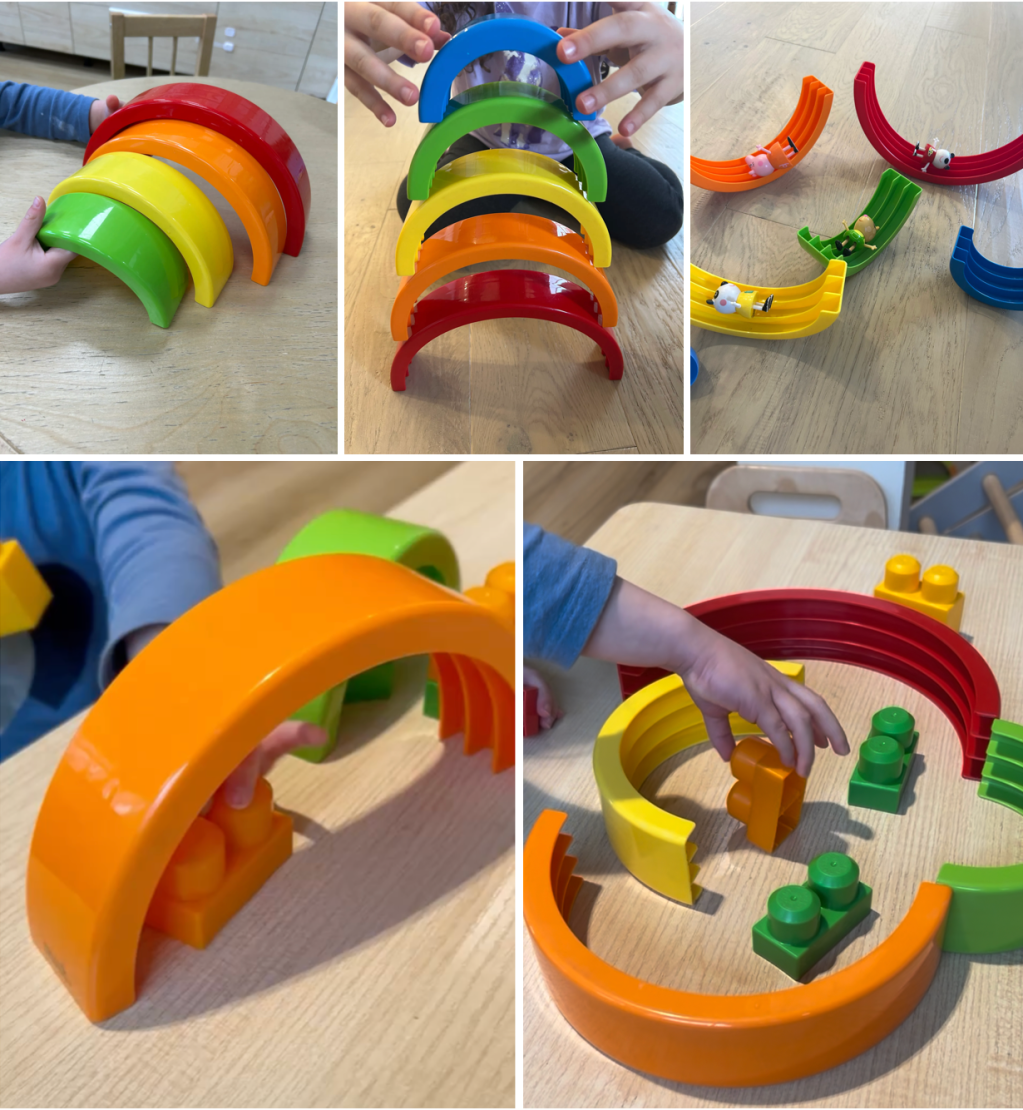
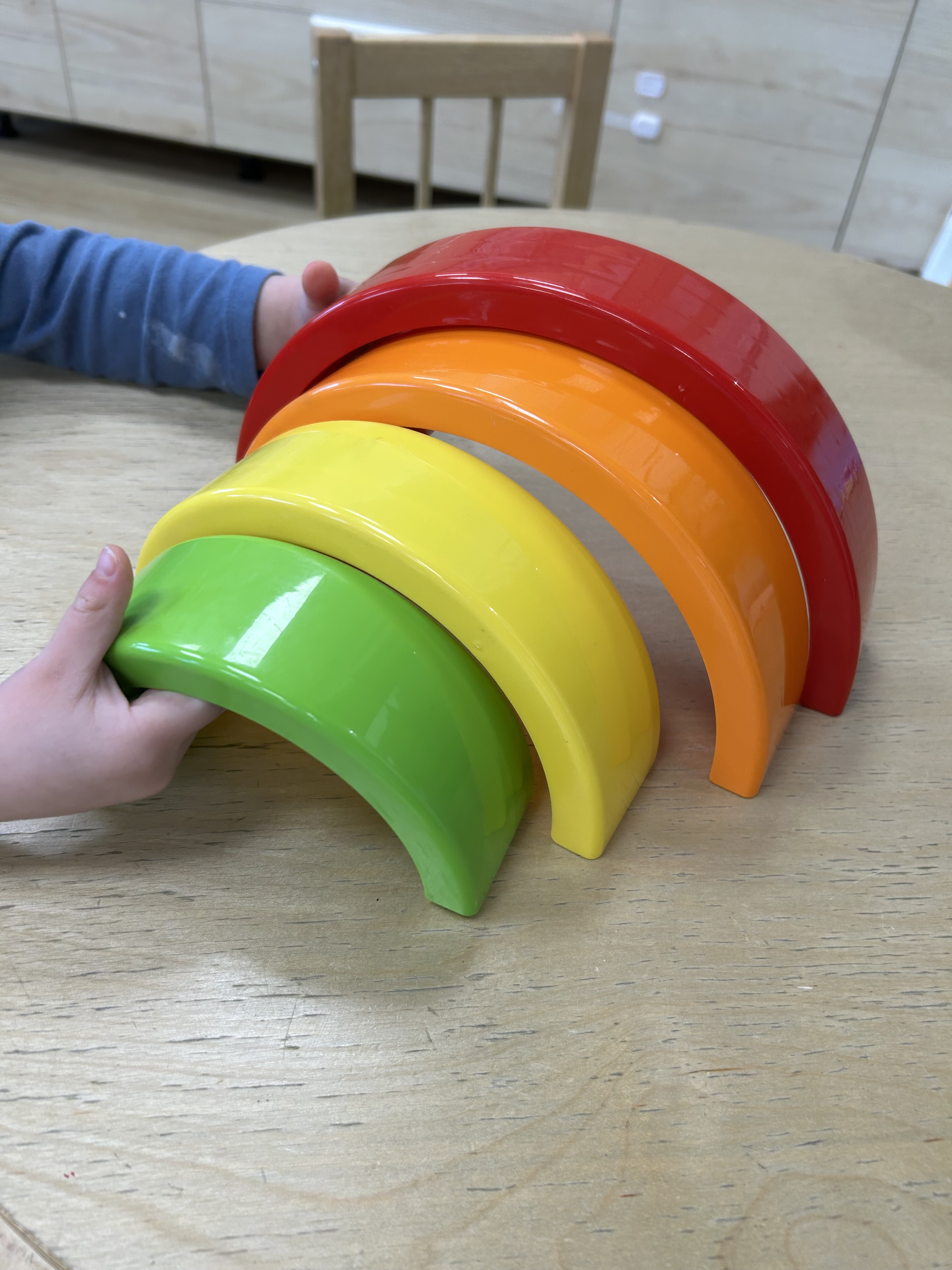
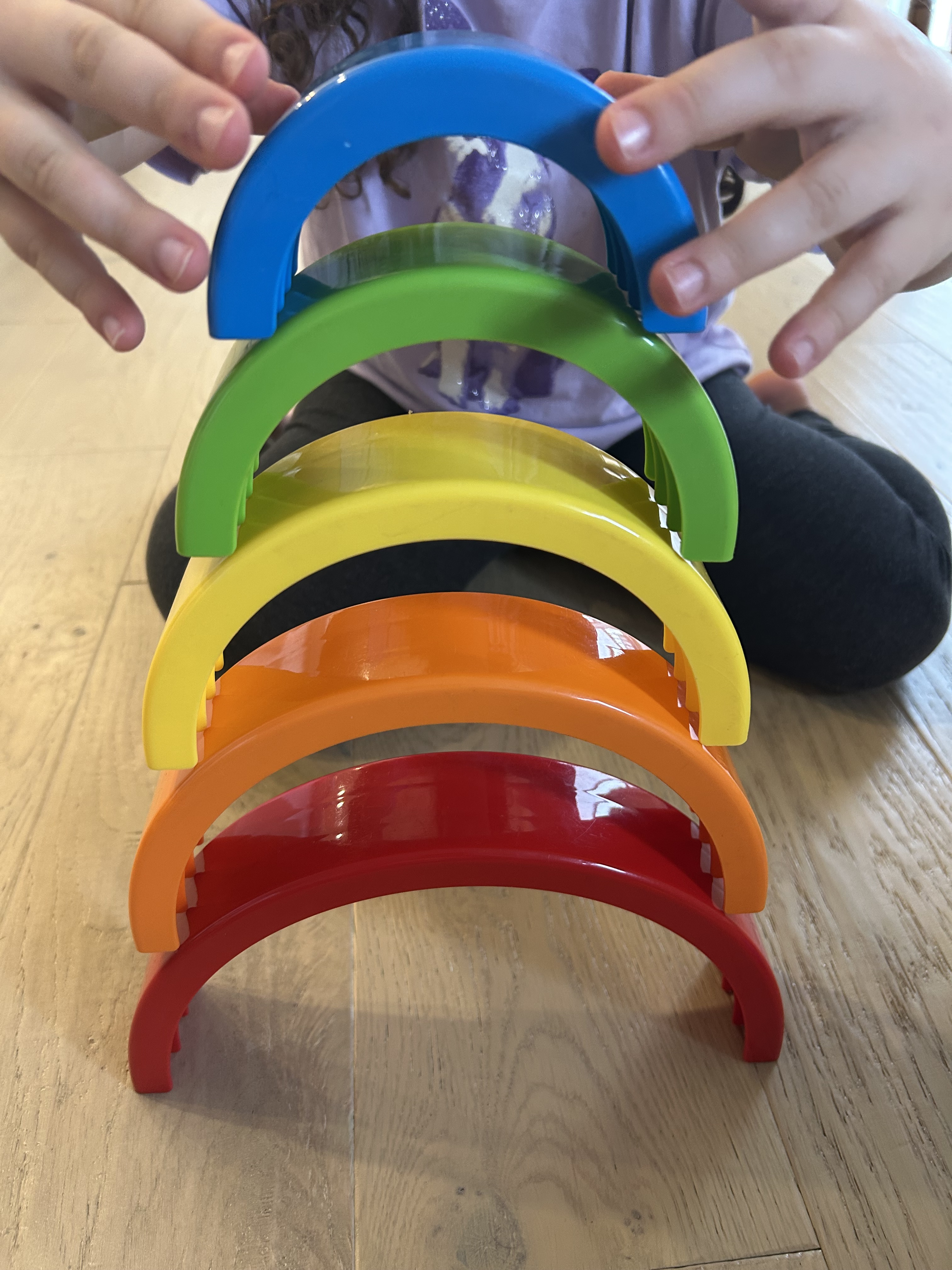
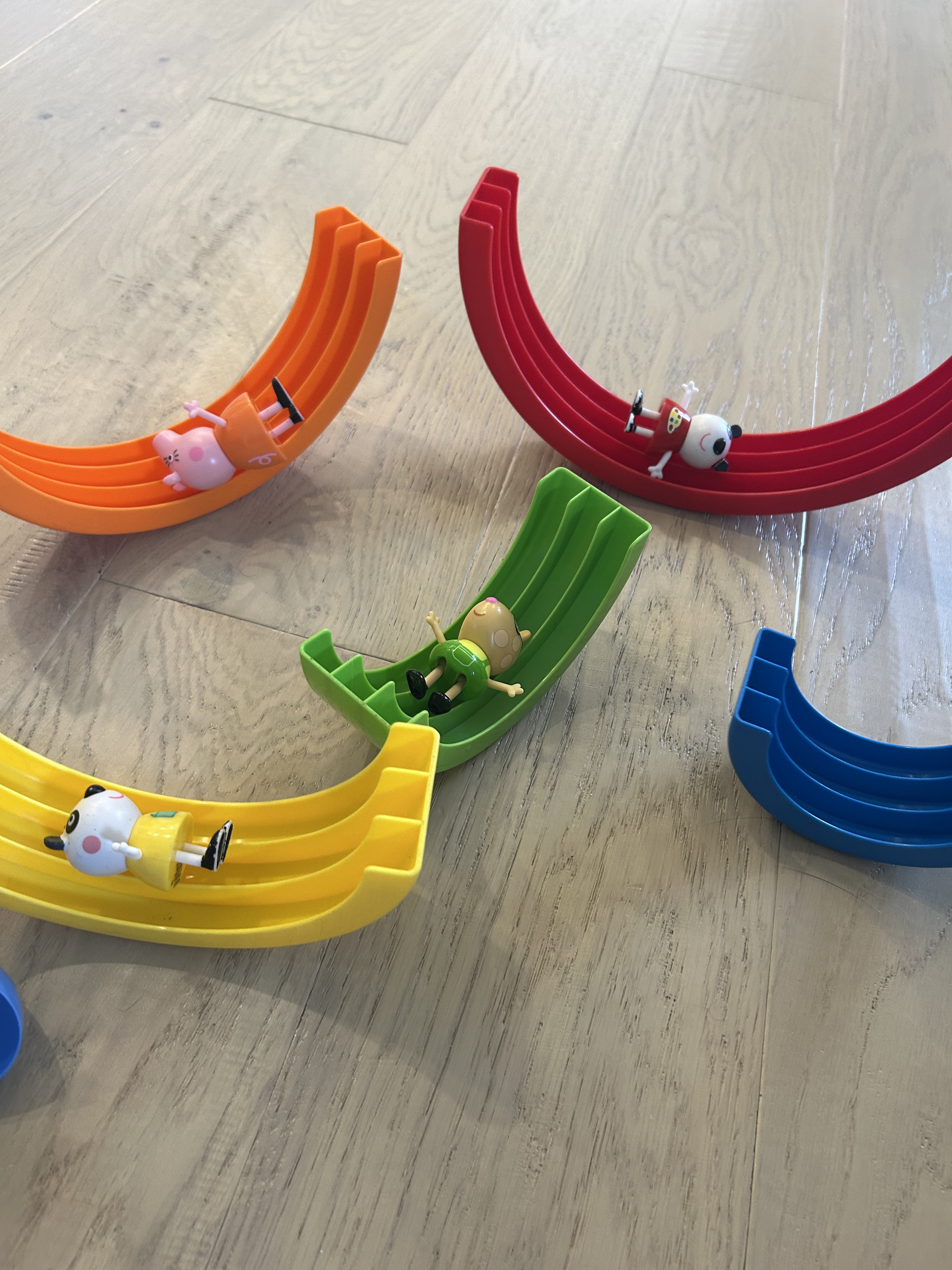
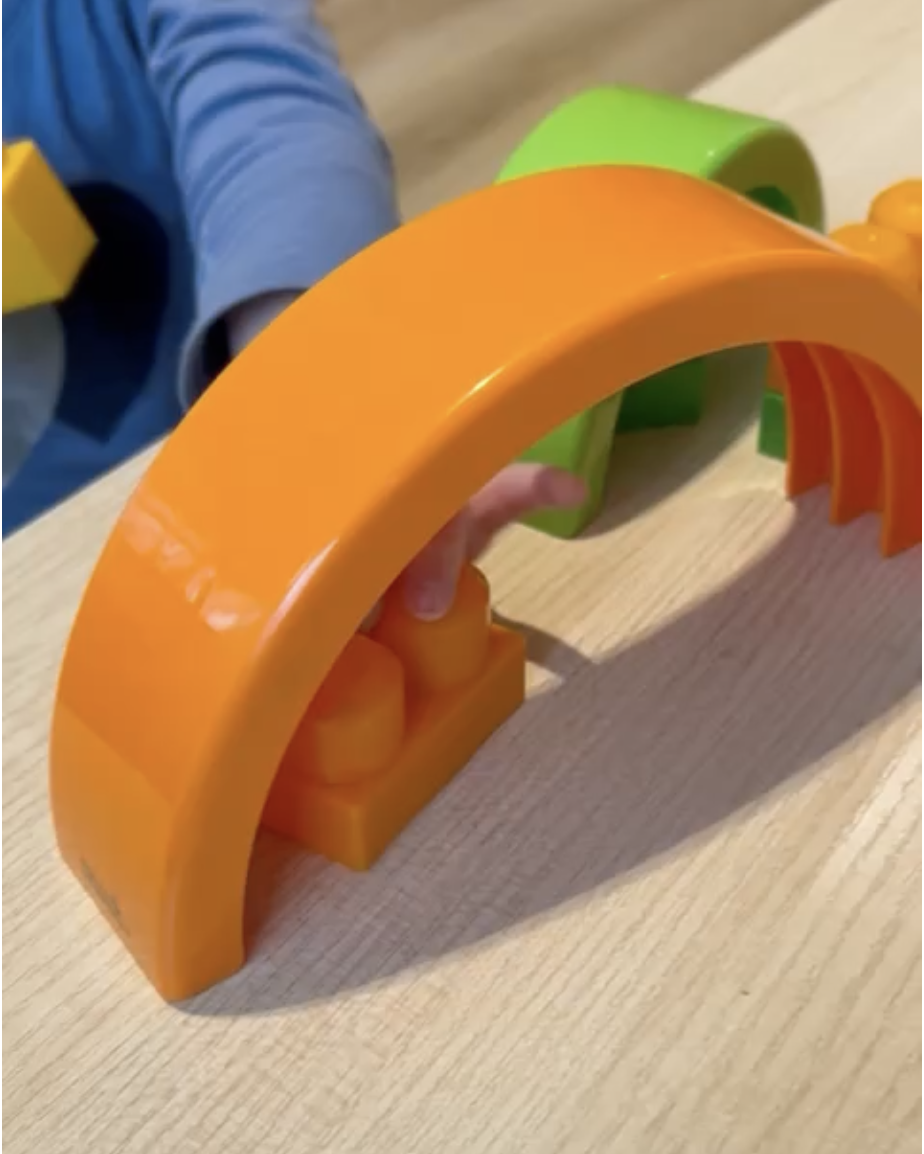
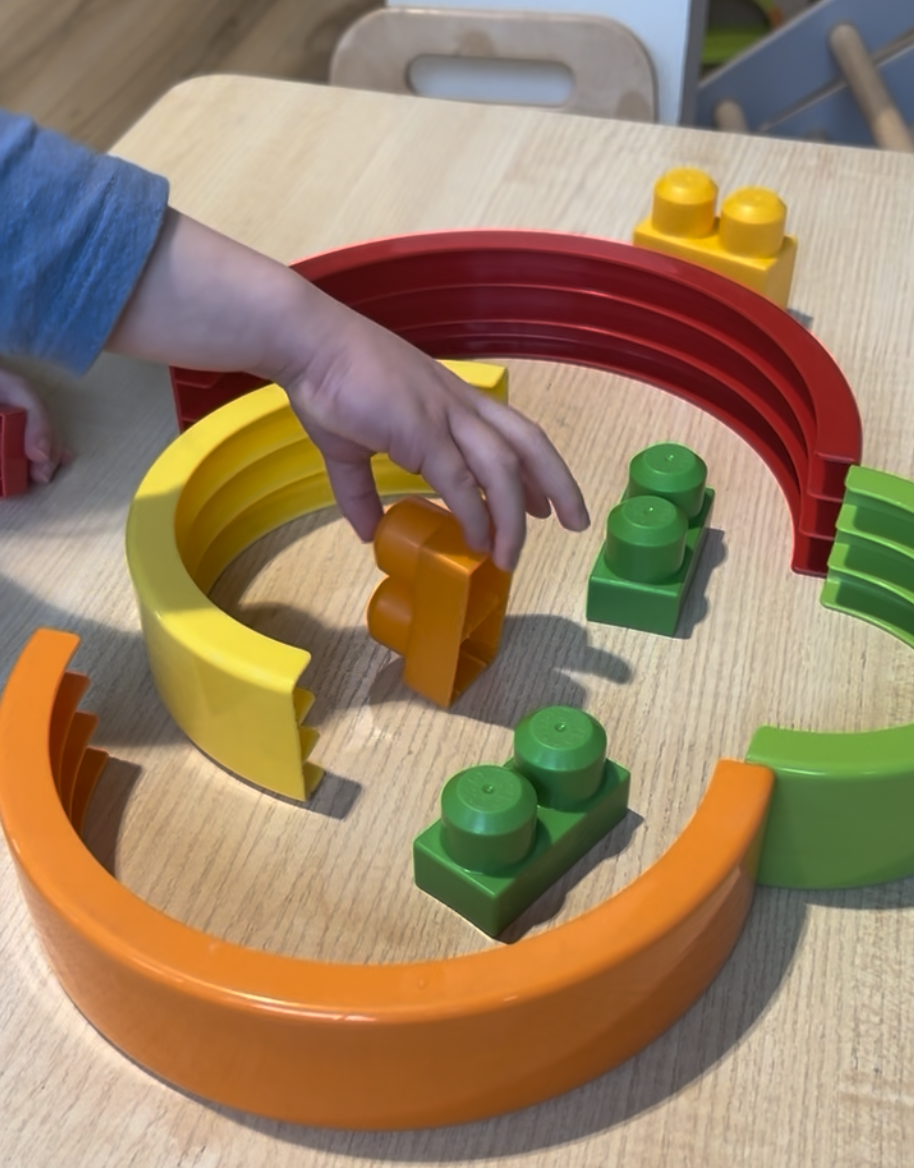
For example, the curved stacking pieces shown here are not just colorful shapes. They are chosen because they create opportunities to explore:
• Size relationships (small to large, nesting, comparison)
• Capacity (what fits inside, what does not)
• Balance and stability (stacking, tipping, adjusting)
• Spatial awareness (rotation, positioning, orientation)
• Attention and persistence (trying, revising, returning)
Imagination – combining and exploring materials to pretend play
This is not random. This is design.
Designing “Open Doors to Engagement”
In MindClusivity™, we refer to this as Open Doors to Engagement; creating multiple entry points into learning.
A well-prepared invitation might:
• Include materials that vary in design but share a relationship
• Be placed in a way that highlights a possibility (stacked, nested, or partially built)
• Leave space for the child to transform the idea
The goal is not to control the outcome, but to offer the possibilities.
The Balance Between Structure and Freedom
Intentional open-ended play lives in the balance between:
• Structure → The adult carefully selects and presents materials
• Freedom → The child decides what to do with them
When both are present, children begin to:
• Explore more deeply
• Stay engaged longer
• Return to ideas and build on them
The Role of the Adult: Thinking Behind the Scenes
Intentionality is often invisible to the child; but very active in the adult.
It looks like:
• Observing what the child is already curious about
• Selecting materials that extend that curiosity
• Adjusting the environment to create new challenges
• Knowing when to step in, and when to step back
This is where real learning design happens.
Not Random. RESPONSIVE
Open-ended materials are most powerful when they are responsive, not random.
They respond to:
• The child’s developmental stage
• Their current interests
• Their ways of engaging with the world
This is how we shift the view to meaningful, connected learning experiences.
The most amazing ideas happen by accident, when curiosity is free to move without limits, judgment, or barriers.
So we create the conditions… and then we let it happen.
Open-ended play is not about doing less as educators.
It is about being intentional and thinking deeply; so children can explore their curiosity freely.
 organicplay.ca
Leave a comment